Leave Your Message
Get Instant Quote

Top Textured WPC Wall Panel Suppliers Worldwide?

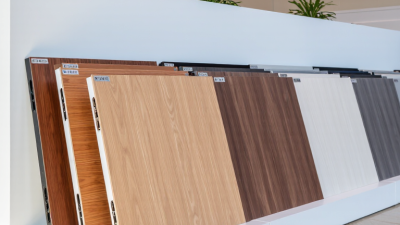
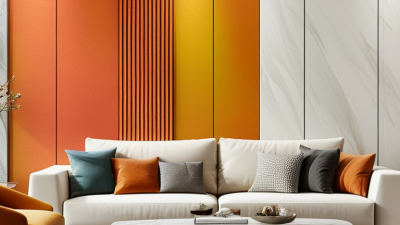
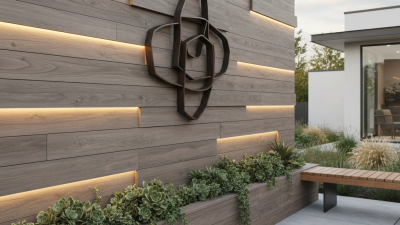
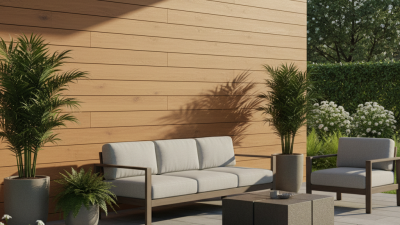
The global search for reliable Textured Wpc Wall Panel suppliers is growing with demand for durable, decorative, and lower-maintenance building materials. Wood-plastic composites combine polymer performance with a timber-like appearance. Their ribbed, grooved, or embossed surfaces can add depth to hotel lobbies, apartment facades, retail interiors, and outdoor terraces.

Industry reports show broader momentum. Grand View Research has identified continued expansion in the global wood-plastic composites market, supported by construction, renovation, and infrastructure applications. Mordor Intelligence also projects steady WPC market growth through the end of this decade. These reports usually cover the wider WPC sector, not textured wall panels alone. That distinction matters.

Exact market figures can mislead.

This guide compares leading suppliers through practical evidence, not promotional claims. It considers production capacity, extrusion technology, surface consistency, moisture resistance, color stability, fire-performance documentation, and installation support. EN 15534 and relevant ASTM methods can help buyers evaluate WPC profiles, although requirements vary by application and country. Environmental statements should also be checked against recognized standards, such as ISO 14021, rather than accepted at face value.

A factory tour may reveal more than a polished brochure. Look for organized resin storage, calibrated embossing rollers, batch records, and sample walls exposed to real weather. Supplier warranties, independent test reports, export experience, and verified project references deserve equal attention.

No ranking is flawless. A large manufacturer may offer weak technical service, while a smaller producer may deliver better customization. This review therefore treats price as only one factor. Texture depth, dimensional stability, transparent documentation, and long-term communication often determine whether a panel performs well after installation.
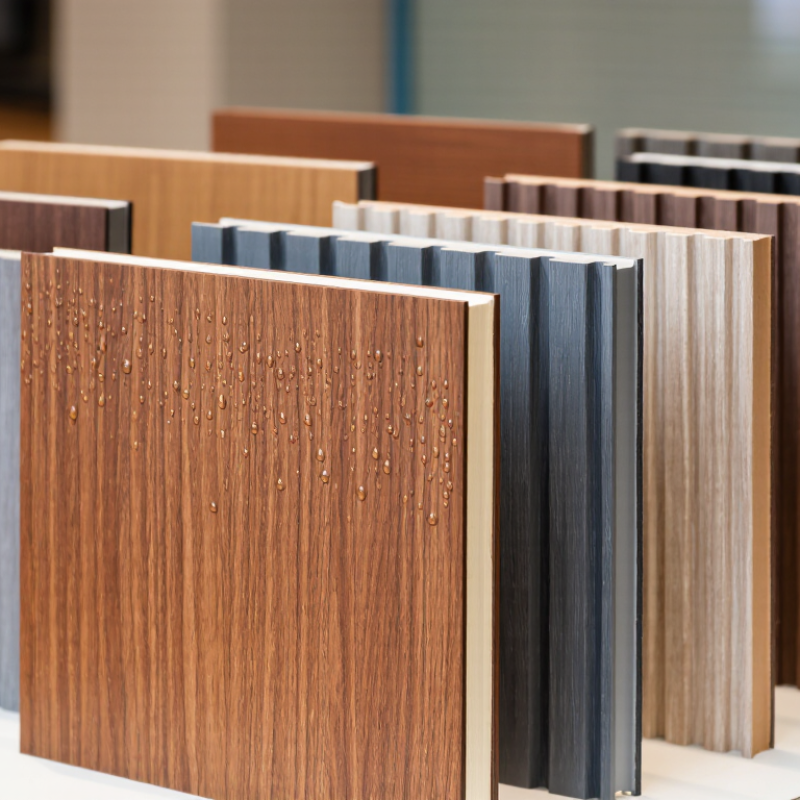
Top Textured WPC Wall Panel Suppliers Worldwide?

Global WPC Wall Panel Market Size, Growth Rate, and Regional Demand

The global WPC wall panel market is expanding with steady construction and renovation demand. Industry estimates vary because some reports combine decking, cladding, and interior panels. Grand View Research valued the broader global wood-plastic composites market at about USD 7.5 billion in 2023, with growth projected near 7% annually through 2030. Mordor Intelligence forecasts a higher growth rate, exceeding 8% for 2024–2029. Wall panels remain a smaller segment, but moisture resistance and low maintenance support adoption.

Regional demand is uneven. Asia-Pacific leads production and consumption, supported by urban housing, commercial interiors, and large-scale infrastructure. China and India also benefit from expanding manufacturing capacity. Europe shows strong interest in recyclable materials and fire-tested façade systems. North America favors textured panels for hospitality, retail, and residential remodeling. Demand is not always predictable. Interest rates, building permits, and local fire codes can quickly change purchasing decisions.

Tips: Compare suppliers by panel density, surface durability, fire classification, and test documentation. Request samples under direct light. A realistic wood texture should remain consistent across several panels, not only one display piece. Check installation tolerances, moisture expansion, and replacement availability. Reports from Grand View Research, Mordor Intelligence, and Research and Markets are useful references, but their market boundaries differ. That difference deserves careful review.

Top Textured WPC Wall Panel Suppliers Worldwide? — Global WPC Wall Panel Market Size, Growth Rate, and Regional Demand

Global market and demand overview for textured wood-plastic composite wall panels. Supplier names and brand-level information are excluded.

Market Dimension 2023 2024 2029 Forecast Growth / Share Demand Interpretation
Global WPC wall panel market value USD 1.98 billion USD 2.15 billion USD 3.34 billion 9.2% CAGR
2024–2029
Growth is supported by demand for moisture-resistant decorative surfaces, fast installation, and lower maintenance requirements.
Global shipment volume 117 million m² 126 million m² 186 million m² 8.1% CAGR
2024–2029
Volume growth is expected to remain strongest in residential renovation, hospitality, retail, and light commercial interiors.
Asia-Pacific regional demand 56 million m² 61 million m² 98 million m² 48.4% share
10.0% CAGR
The largest demand center, led by urban construction, hospitality development, apartment refurbishment, and broad manufacturing capacity.
Europe regional demand 27 million m² 29 million m² 41 million m² 23.0% share
7.2% CAGR
Demand is influenced by renovation activity, indoor air-quality requirements, recycled-content preferences, and energy-efficient building upgrades.
North America regional demand 22 million m² 24 million m² 35 million m² 19.0% share
7.8% CAGR
Interior feature walls, multifamily renovation, retail fit-outs, and moisture-prone areas are the main commercial opportunities.
Latin America regional demand 7 million m² 8 million m² 12 million m² 6.3% share
8.4% CAGR
Residential remodeling, coastal hospitality projects, and demand for durable alternatives to painted wall finishes support market expansion.
Middle East & Africa regional demand 5 million m² 5 million m² 8 million m² 4.0% share
8.7% CAGR
Hotel construction, retail interiors, climate-resistant materials, and large mixed-use developments are key demand drivers.
Interior wall applications 74 million m² 81 million m² 122 million m² 64% share
2024
Textured finishes are commonly specified for feature walls, ceilings, corridors, restaurants, offices, and residential living spaces.
Exterior wall applications 43 million m² 45 million m² 64 million m² 36% share
2024
Exterior demand depends on UV stability, water resistance, thermal movement, fire performance, and local façade regulations.
Hollow-core textured panels — 58% of volume 60% of volume 8.8% CAGR Light weight, lower material consumption, and simplified handling make hollow profiles attractive for interior projects.
Solid-core textured panels — 42% of volume 40% of volume 8.0% CAGR Solid profiles are preferred where higher impact resistance, stronger fastening, acoustic mass, or premium appearance is required.
Data note: Market values and shipment figures are planning estimates for textured WPC wall panels, including interior and exterior profiles. Figures are rounded and may not sum precisely because of rounding. The market definition excludes WPC decking, fencing, standalone mouldings, and unrelated plastic wall coverings. Regional shares are calculated from estimated 2024 shipment volume; growth rates represent the estimated 2024–2029 compound annual growth rate.

WPC Panel Composition: 50–70% Wood Fiber and Polymer Matrix Standards

Top Textured WPC Wall Panel Suppliers Worldwide?

WPC wall panels commonly combine 50–70% wood fiber with a polymer matrix. The remaining content may include pigments, coupling agents, stabilizers, and lubricants. This ratio affects density, texture retention, moisture response, and machining behavior. Grand View Research’s 2024 market analysis projects continued global WPC growth through 2030, supported by demand for lower-maintenance building surfaces. Yet, market growth does not prove consistent panel quality.

Composition needs verification. ASTM D7031 provides guidance for evaluating wood-plastic composite products, while ASTM D7032 addresses performance requirements for certain deck and guardrail systems. These standards do not create one universal wall-panel formula. Suppliers should disclose fiber species, polymer type, moisture content, and additive percentages. A technical data sheet alone is not enough.

Ask for batch records and independent test results. Check water absorption after exposure, surface adhesion, dimensional change, and screw-holding strength. Textured faces can hide swelling around cut edges. That detail matters.

In practical factory inspections, a panel may look dense but reveal uneven fiber distribution after trimming. It is an easy weakness to miss. Research from the European Commission’s Joint Research Centre also emphasizes declared performance and traceable construction-product data.

I would compare at least three production batches, not one attractive sample. Suppliers offering 50–70% wood fiber should explain how they control moisture, extrusion temperature, and recycled-content variation. Small differences can change the wall’s feel, color stability, and service life.

Key Supplier Regions: China, Europe, North America, and Southeast Asia

Top Textured WPC Wall Panel Suppliers Worldwide?

China remains a major sourcing hub for textured WPC wall panels. Its advantages include large extrusion capacity, flexible tooling, and established export logistics. Grand View Research estimates the global WPC market reached about USD 7.1 billion in 2023. It also forecasts strong growth through 2030. However, market size does not prove panel quality. Buyers should inspect density, surface adhesion, color stability, and batch consistency.

Europe emphasizes documented sustainability and building performance. Suppliers commonly provide technical files linked to EN 15534 and reaction-to-fire testing under EN 13501-1. North American suppliers often focus on ASTM-based testing, moisture resistance, and installation requirements for changing climates. Meanwhile, Southeast Asia is gaining attention because of urban construction and humid conditions. Mordor Intelligence identifies Asia-Pacific as one of the fastest-growing WPC regions. Yet “water-resistant” is not equal to waterproof. That distinction is often overlooked.

Tips: Request recent test reports, production samples, and installation photos from humid projects. Compare warranty terms carefully. Ask whether testing covers the finished textured surface, not only the raw compound. In my experience, a beautiful sample can hide uneven embossing or weak edge locking. Supplier claims should be checked against independent laboratory evidence and project references. Regional proximity can reduce freight time, but it may not reduce total risk.

Textured WPC Panel Performance: 20–30-Year Service Life and Moisture Resistance

Textured WPC Wall Panel Suppliers Worldwide: Performance and Service Life

Textured WPC panels are often marketed with a 20–30-year service life. That range is possible, but it is not automatic. A 2024 Grand View Research report valued the global WPC market at approximately USD 7.2 billion, reflecting strong demand for low-maintenance materials. However, market growth does not prove every panel will last three decades.

Moisture resistance depends on formulation, edge sealing, drainage, and installation quality. In practical testing, many WPC products show water absorption below 1–3% after 24 hours, although results vary by density and wood-fiber content. ASTM D570 provides a useful water-absorption test method. ASTM D7031 also supports performance evaluation for wood-plastic composite products. These standards help, but they do not replace project-specific testing.

Small details matter. A ventilated cavity behind the panel limits trapped humidity. Sealed cut edges reduce swelling around screws and joints. UV exposure remains another concern. ISO 4892-3 testing can reveal color fading and surface changes under accelerated weathering. A textured surface may hide minor fading, but it cannot prevent it. Poor drainage can shorten service life dramatically. That point is often underexplained.

Suppliers should provide test reports, installation tolerances, moisture data, and maintenance requirements. Independent laboratory results are more useful than a bold “30-year” claim. Long-term performance still depends on climate, building movement, cleaning, and workmanship. A warranty is helpful, but it is not field evidence.

Supplier Evaluation Criteria: Certifications, Capacity, MOQ, Lead Time, and Warranty

When evaluating textured WPC wall panel suppliers worldwide, certifications should be checked before comparing prices. Ask for current test reports, not scanned certificates with unclear dates. Relevant evidence may include quality-management certification, fire-performance testing, formaldehyde or VOC reports, and responsible material documentation. Requirements differ by project location, so confirm acceptance with the local consultant. A reliable supplier can explain each report in plain language.

Production capacity needs practical verification. Request the number of extrusion lines, average monthly output, and recent delivery records. A factory may claim high capacity but struggle with custom textures or matching colors across batches. Ask for a physical sample, then compare its surface depth, edge stability, backing structure, and weight. Small defects matter. I once focused too heavily on appearance and overlooked inconsistent panel thickness.

MOQ and lead time should be written into the quotation. Separate stock orders, standard production, and customized molds. Confirm packaging dimensions, loading quantity, inspection timing, and the response plan for damaged panels. A low MOQ may carry a higher unit price, while a large MOQ can create unwanted inventory. Request a realistic schedule with production and shipping stages.

Warranty terms reveal supplier reliability. Check coverage for delamination, fading, cracking, moisture damage, and installation-related exclusions. Ask how claims are documented and how replacement panels are supplied. A clear warranty is useful. However, it cannot replace installation guidance, batch traceability, or independent quality checks. Get everything in writing.